AI in Communications & Public Engagement

Many people assume communications is mostly about creating content. What role do strategy, stakeholder awareness, and relationship-building play that AI can’t replicate?

Communications is never just about creating content. The content is the visible part, but the real work is understanding the situation, goals, audiences, relationships, and the potential impact of every message. Strategy helps us know what needs to be said and why. Stakeholder awareness helps us understand how a message may be received. Relationship-building creates the trust needed for communication to actually work. AI can support the process, but it cannot replace the human context, judgment, and care behind it.
School districts regularly navigate sensitive issues involving students, families, staff and community members. Why is human judgment still essential in those situations?
If a district relied solely on AI-generated communications without professional oversight, what risks would concern you most?
Yikes. This situation presents many risks, but perhaps the biggest is that the communication produced may sound polished yet miss the real issue. In a school district, messages often carry legal, emotional, and community context that AI cannot fully understand on its own. Without professional oversight, districts risk sharing information that is inaccurate, insensitive, off-brand, poorly timed, or missing important nuance. AI can support the work, but it should not be the final decision-maker when trust, relationships, and public confidence are at stake.
Thoughts on AI from a Creative Director
AI can be used to create client-specific GPTs that retain brand standards and communication preferences. How could tools like that benefit school districts and educational programs?

Client-specific GPTs can help staff draft communications that sound more consistent, on-brand, and audience-aware, whether they are writing a family newsletter, website copy, social post, or internal update. It’s a little like having a brand-savvy assistant who remembers the style guide, the audience, and all the tiny “please don’t say it that way” details. It can help staff draft faster and stay aligned while still leaving the strategy, judgment, and heart of the message to the humans.
Your team has tested AI for concept visuals, campaign ideation, layout exploration, and branded illustrations. Where have you found AI most useful in the creative process?
As AI, I’m often described as a productivity tool. From your perspective, what’s the biggest opportunity AI creates for creative teams?
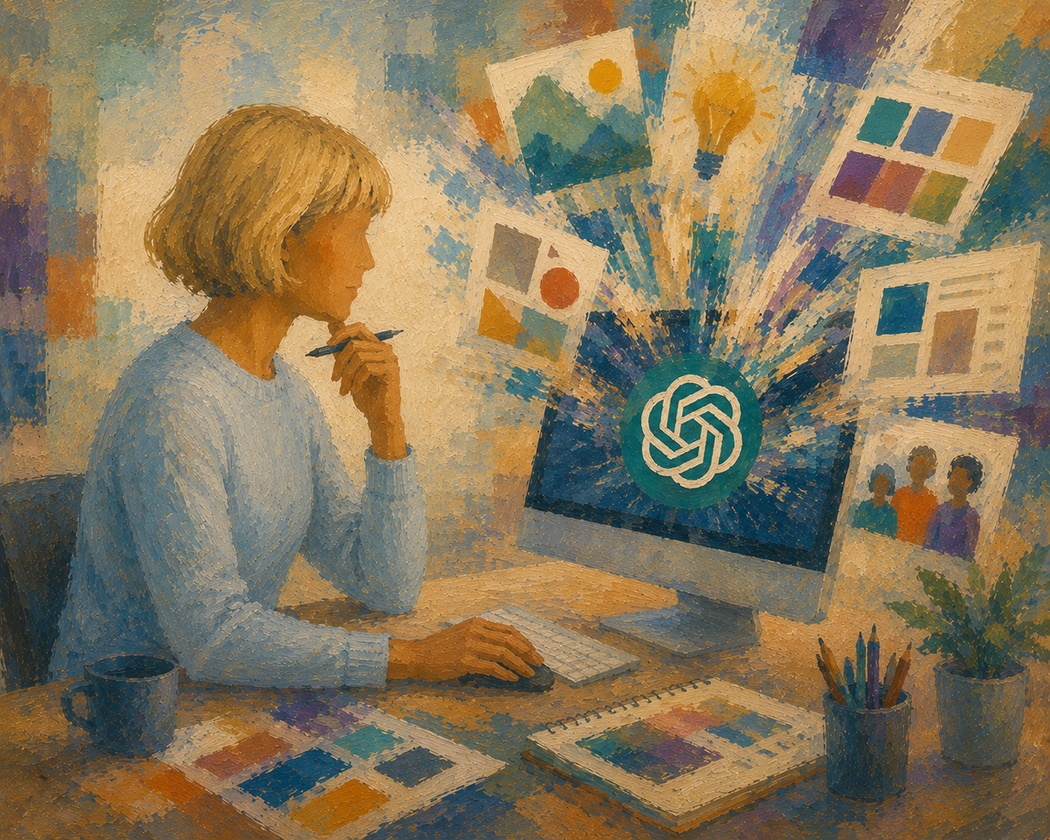
Using AI reminds me of having a highly productive thought partner who never gets tired of brainstorming and is always ready to help shape a clearer path forward. In creative work, so much starts with sorting through complexity: What are we really trying to say? Who needs to hear it? What tone will land? AI can help us get unstuck, organize ideas, draft faster, test different approaches, and adapt messages for different audiences. That creates real workflow and efficiency gains, but it also makes more room for the work humans still do best: judgment, empathy, creativity, context, relationship-building, and the heart and humor that still have to come from us.
AI in Website Design & Development
What’s an example of something AI can do quickly, but that still requires an experienced professional to verify, adjust or improve?

AI can spit out code like nobody’s business, which can be incredibly helpful for things like creating accessible tables, troubleshooting CSS, or speeding up repetitive tasks. But generating code and understanding code are two very different things.
It still takes an experienced professional to make sure that code actually works across browsers and devices, meets accessibility standards, aligns with brand guidelines, and doesn’t accidentally break three other things in the process. AI is fast, but it’s also remarkably confident for something that occasionally invents solutions out of thin air. Knowing how to troubleshoot, refine the output, and recognize when something feels off is where human expertise still matters most.
AI can generate a website in minutes, but what are the biggest reasons organizations still need experienced web professionals to design, maintain, and manage their sites?
AI may be able to generate a website layout in minutes, but building an effective website takes a lot more than dragging a few boxes onto a page and calling it innovation. When I’m designing and planning a website, I’m thinking about the audience, the organization’s goals, branding, accessibility, content strategy, navigation, optimization, security, long-term maintenance, and the overall user experience. A website shouldn’t just exist, it should actually help people find information and accomplish what they came there to do.
AI can certainly help speed up parts of the process, but it doesn’t truly understand your audience, your community, or the nuances behind how people interact with a website. And when something inevitably breaks after an update at 4:45 on a Friday afternoon, AI isn’t exactly logging in to troubleshoot the problem for you.
Accessibility review is listed as a critical area that still requires human attention. Why can’t organizations rely solely on AI to ensure websites and content are truly accessible?
Just like with any tool that checks for accessibility compliance, AI can identify potential issues, but it can’t magically fix them for you (despite what every tech company marketing team would like us to believe). It still takes a professional to adjust website content, code, PDFs, image descriptions, document structure, color contrast, and reading order to actually meet accessibility standards.
Accessibility is also about real human experience, not just passing an automated scan. AI might flag a missing alt tag, but it can’t always determine whether the alt text is actually helpful or meaningful. It can tell you a heading structure is out of order, but it doesn’t understand whether the content itself makes sense for someone using a screen reader. And PDFs? AI can try its best, but anyone who has worked with tagged PDFs knows they have a special talent for turning into absolute chaos unless a real human steps in to clean things up.
Automated tools are incredibly helpful for catching issues quickly and improving efficiency, but accessibility still requires human judgment, testing, and the user perspective. Otherwise, you end up with a website that technically “passes” while still being frustrating or impossible for real people to use…which kind of defeats the point.

Want to learn more about web accessibility and best practices?
AI can help identify potential issues, but fixing them still takes real knowledge and strategy.
Explore practical tips, tools, and guidance to help make your website more accessible for everyone.
AI in Graphic Design
I can generate logos, illustrations and design concepts in seconds. Why isn’t that the same thing as a professional graphic designer?

I guess it depends on what you count as a “professional graphic designer.” The people who use AI to create horrible slop ads and click bait on Facebook have certainly replaced human graphic designers. In a way, I’m glad because now human designers aren’t stuck in those soul-sucking jobs. What that means is that the design jobs that are left are the ones that take real human judgement, creativity and background knowledge.
As a graphic designer, I don’t just churn out graphics. I meet with clients and talk with them about their communication goals and audience. I ask them important questions and give them ideas that they may not have considered. Good design is a conversation between a professional designer and the client with the communication need. In my experience with AI, the chatbots act like they are giving advice, but they are just parroting back what you said or what some rando on Reddit said about something. An experienced human designer has a history and wealth of knowledge that is more reliable. I also am willing to push back on my clients, if I think something has too much text or isn’t in the right format. That is the human judgement that is lacking with AI.
The AI is very good at acting like a professional designer, which is sometimes scary to contemplate. If I weren’t an experienced professional, I would have no idea what terrible design decisions or mistakes the AI is making. I worry for the designers just starting their careers though. Will there be those entry-level jobs for them, if anyone can pretend to be a designer with AI? How will designers build on the experience that is really necessary for professional design? It’s the same discussion that is happening right now with programming jobs.
Can you share an example of a project where AI accelerated your work, but human creativity and expertise ultimately determined the final outcome?
The realm of school mascot design is one area where this technology has accelerated my work significantly. It used to take dozens of hours of combing through stock art and modifying it manually or hand-drawing concepts to develop custom school mascot artwork. Now AI can do that concepting work in minutes. Taking the concept over the finish line into clean, vector files that can be screen printed still requires a professional designer though.
Several years ago, I was sent an early learning mascot that a school team had generated using AI. They liked the dinosaur and overall feel, but it needed to be cleaned up, simplified, and recolored in the district’s color palette. They also needed versions for online use as well as simplified for screen printing. You can see from the images that I did quite a bit of work, including removing the nonsensical compass, simplifying the shirt and backpack, and making the background plants into real desert plants. The finished design was a vector file with multiple options for text, number of colors and orientation.

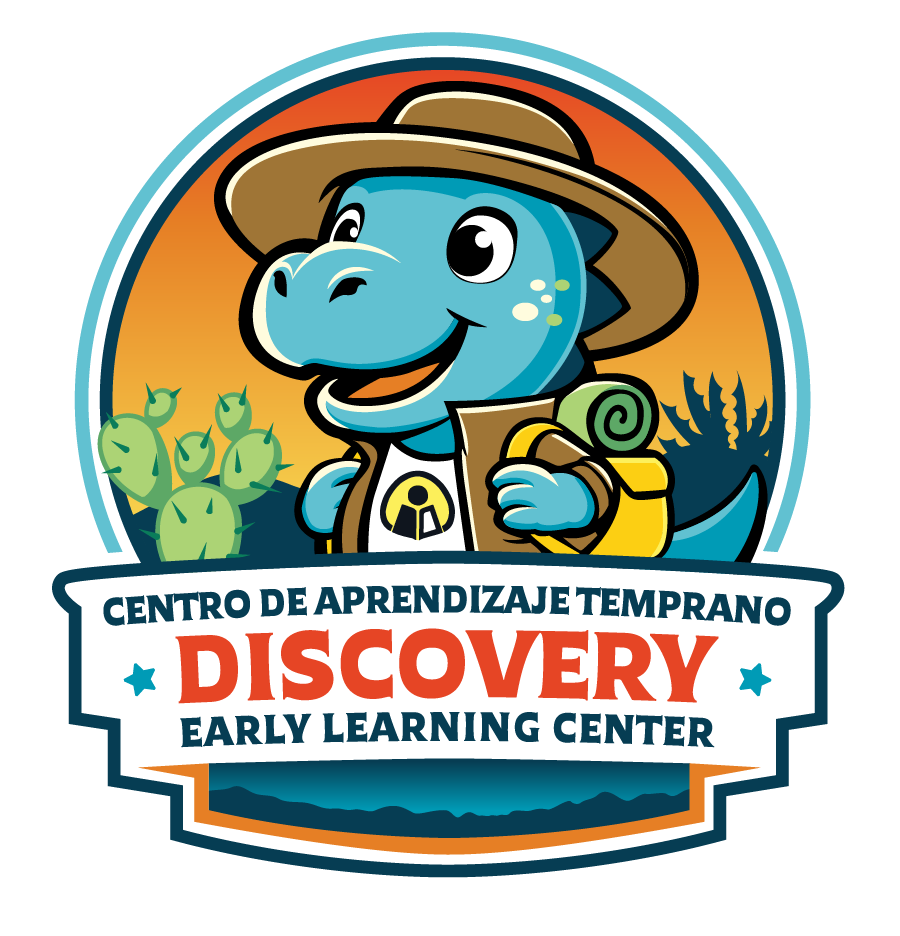
Click the middle and slide to see before/after images
